SELECTED WORK · AL-0015
The House of Transitions
Zhen Qi
PROJECT RECORD
THE WORK
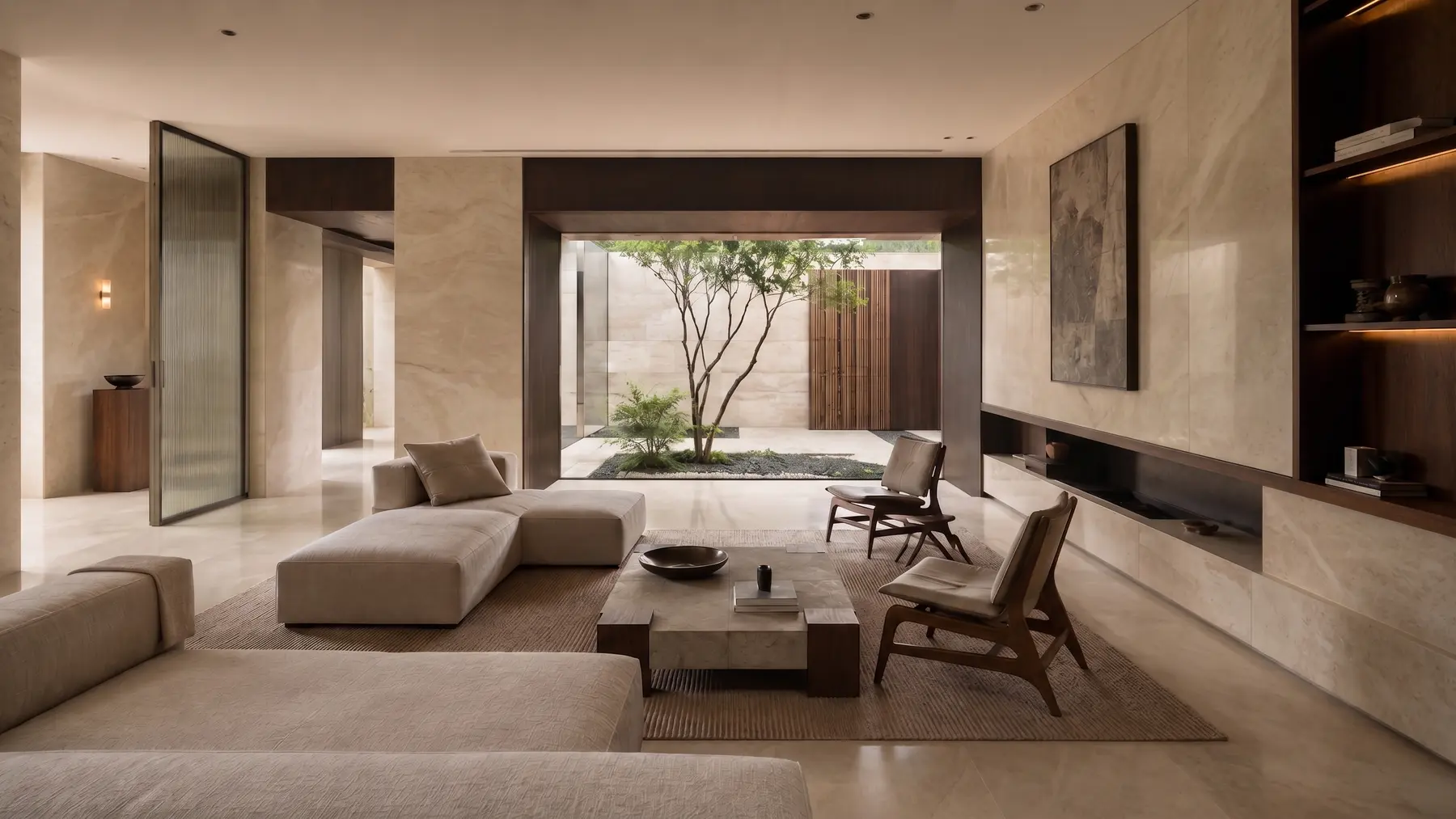
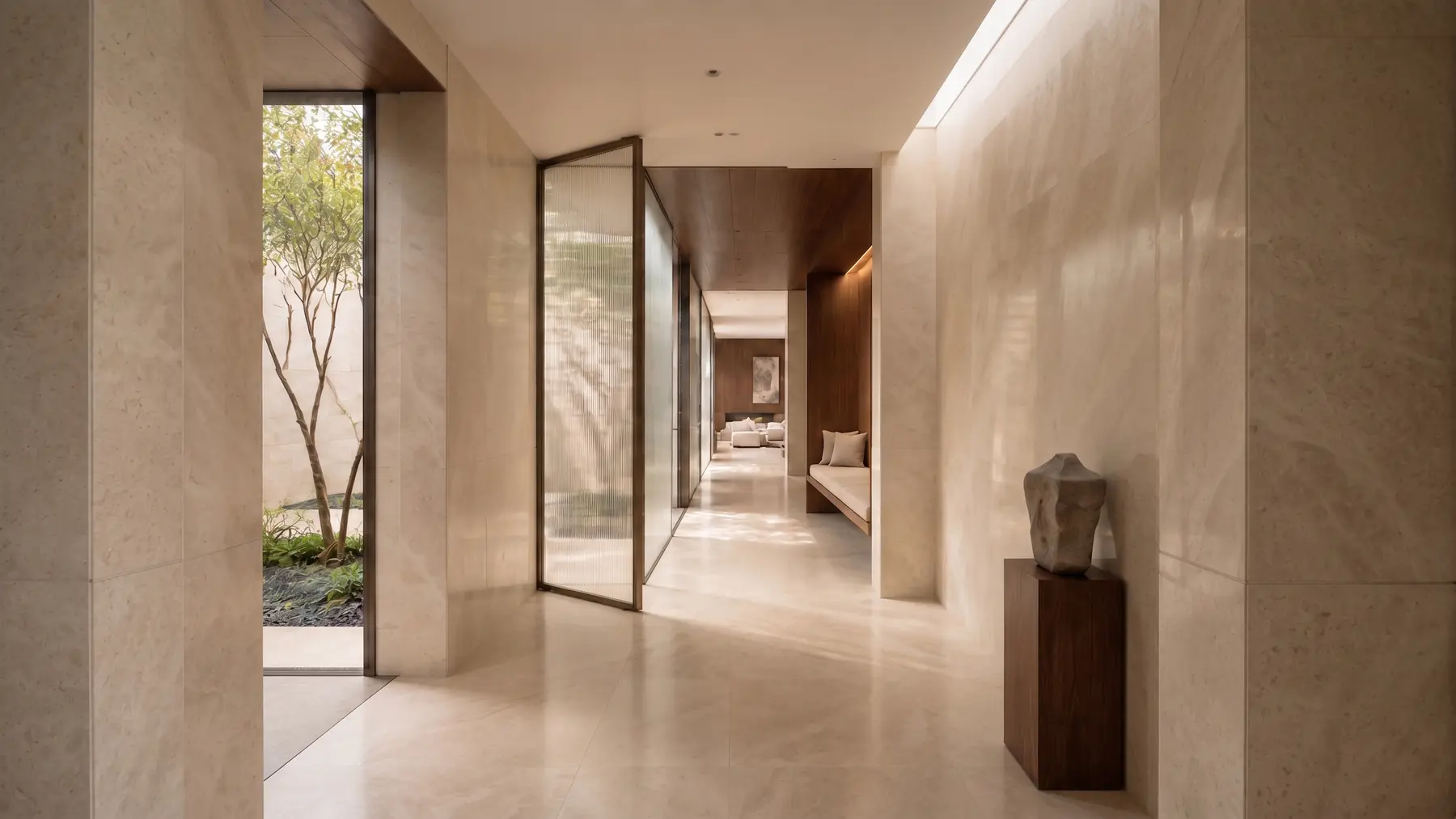
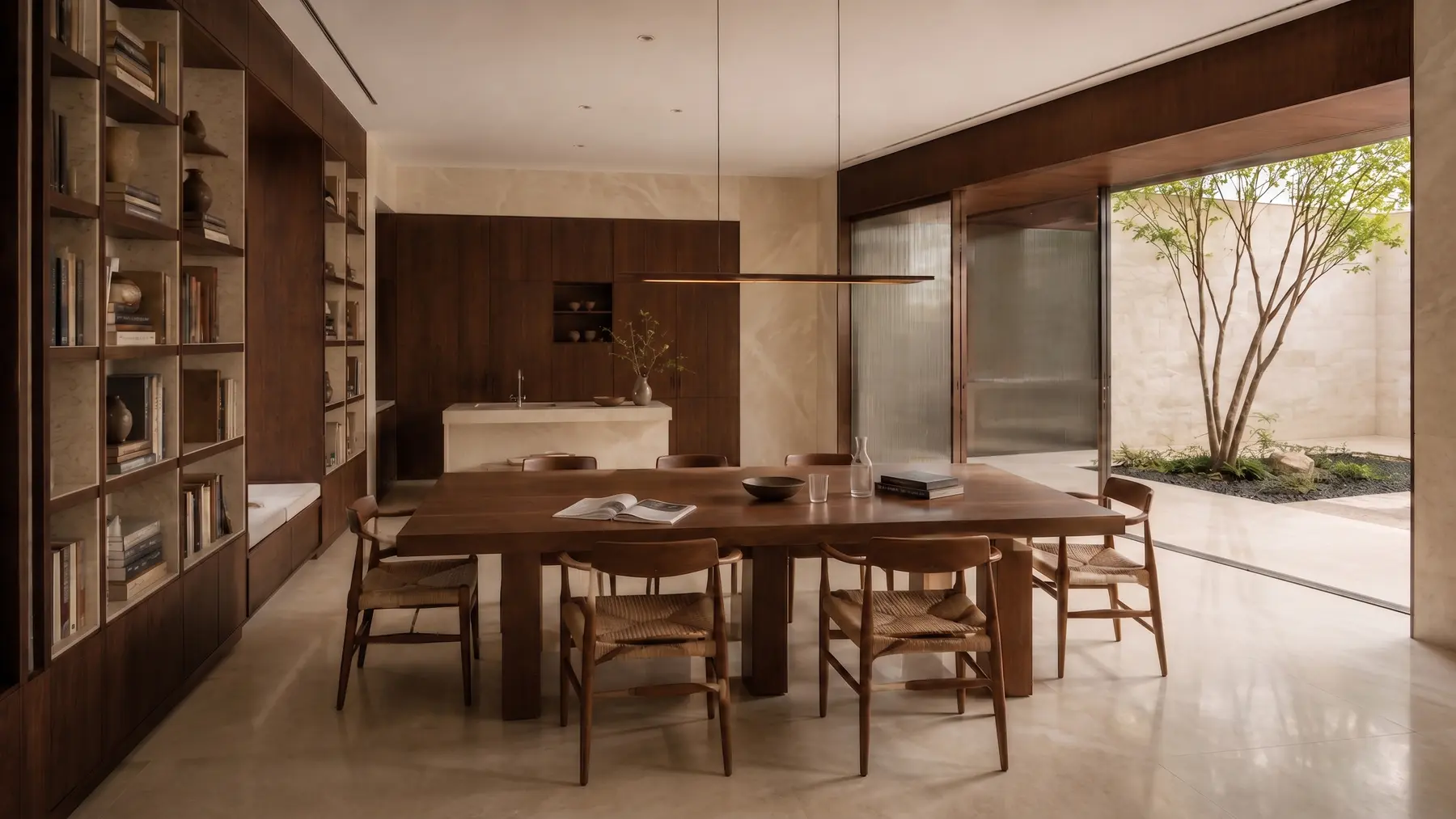
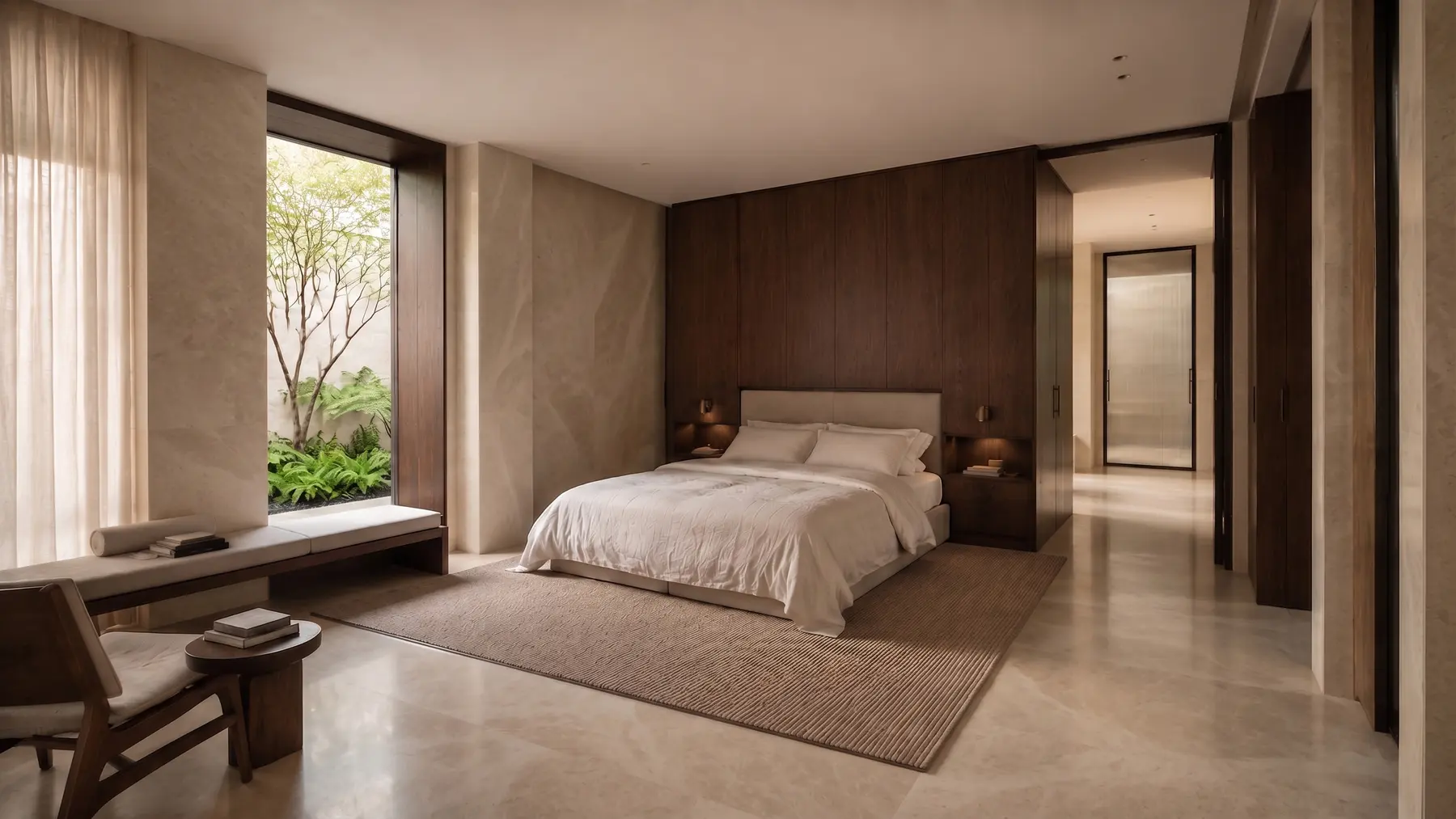
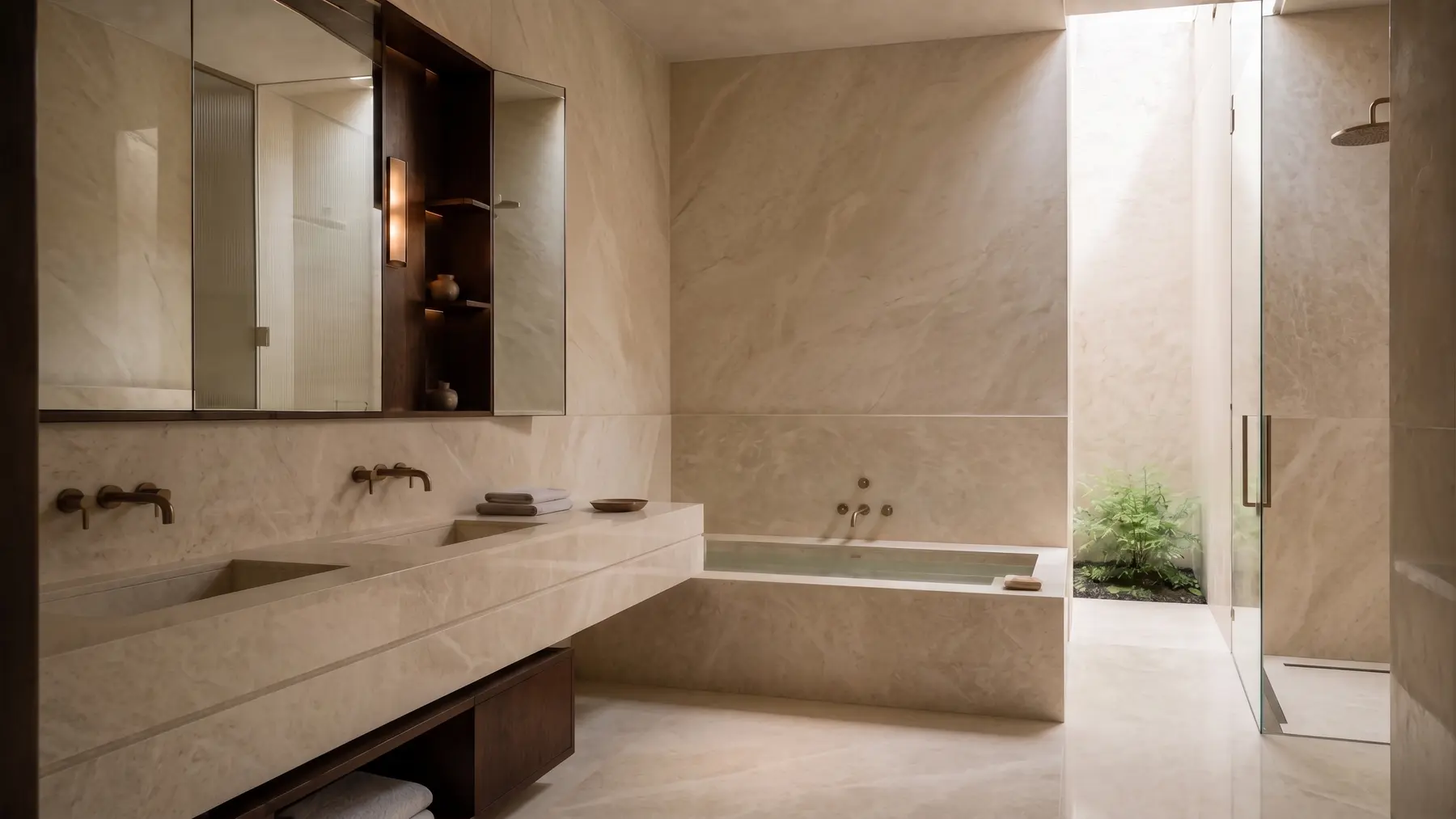
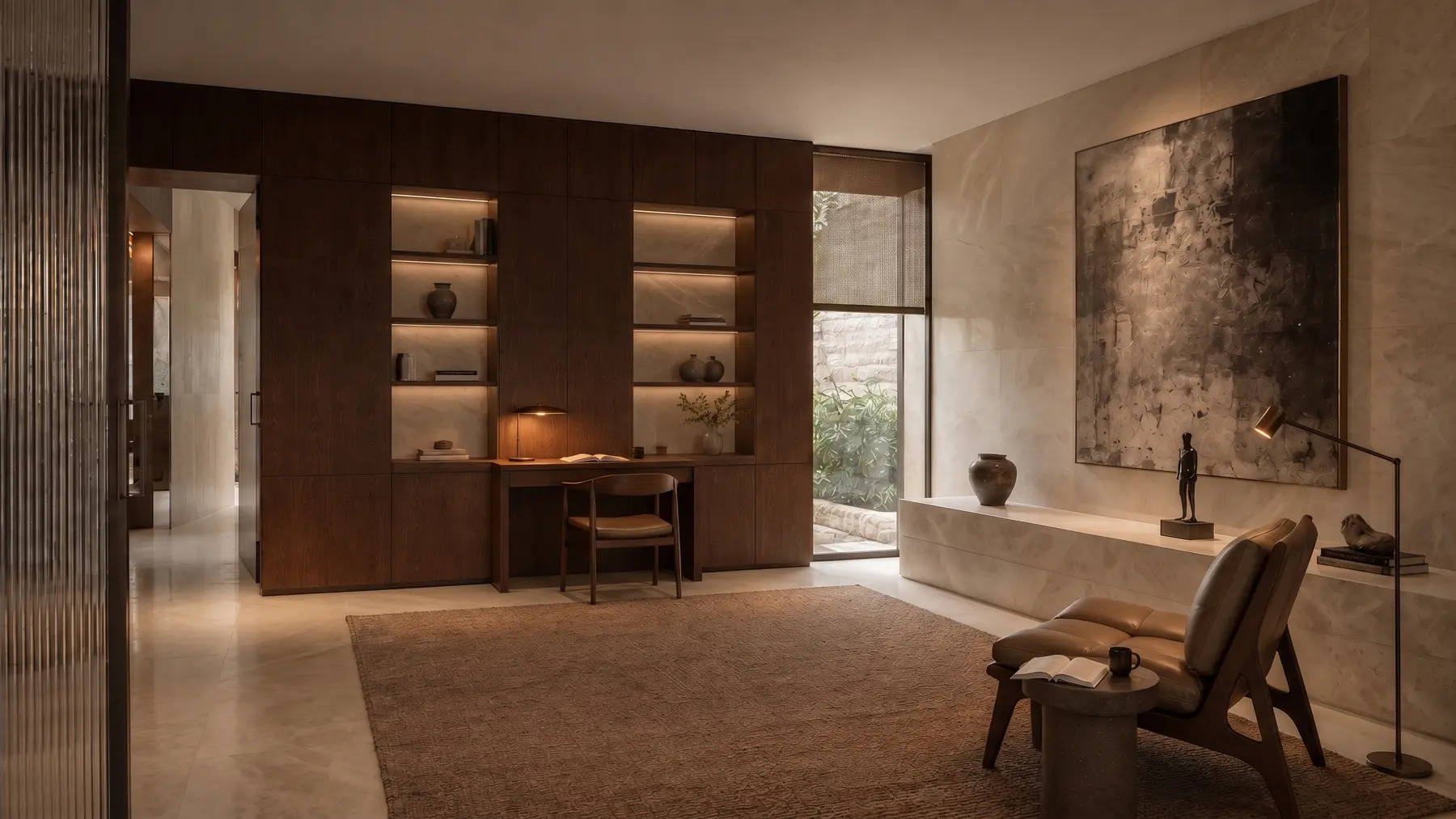
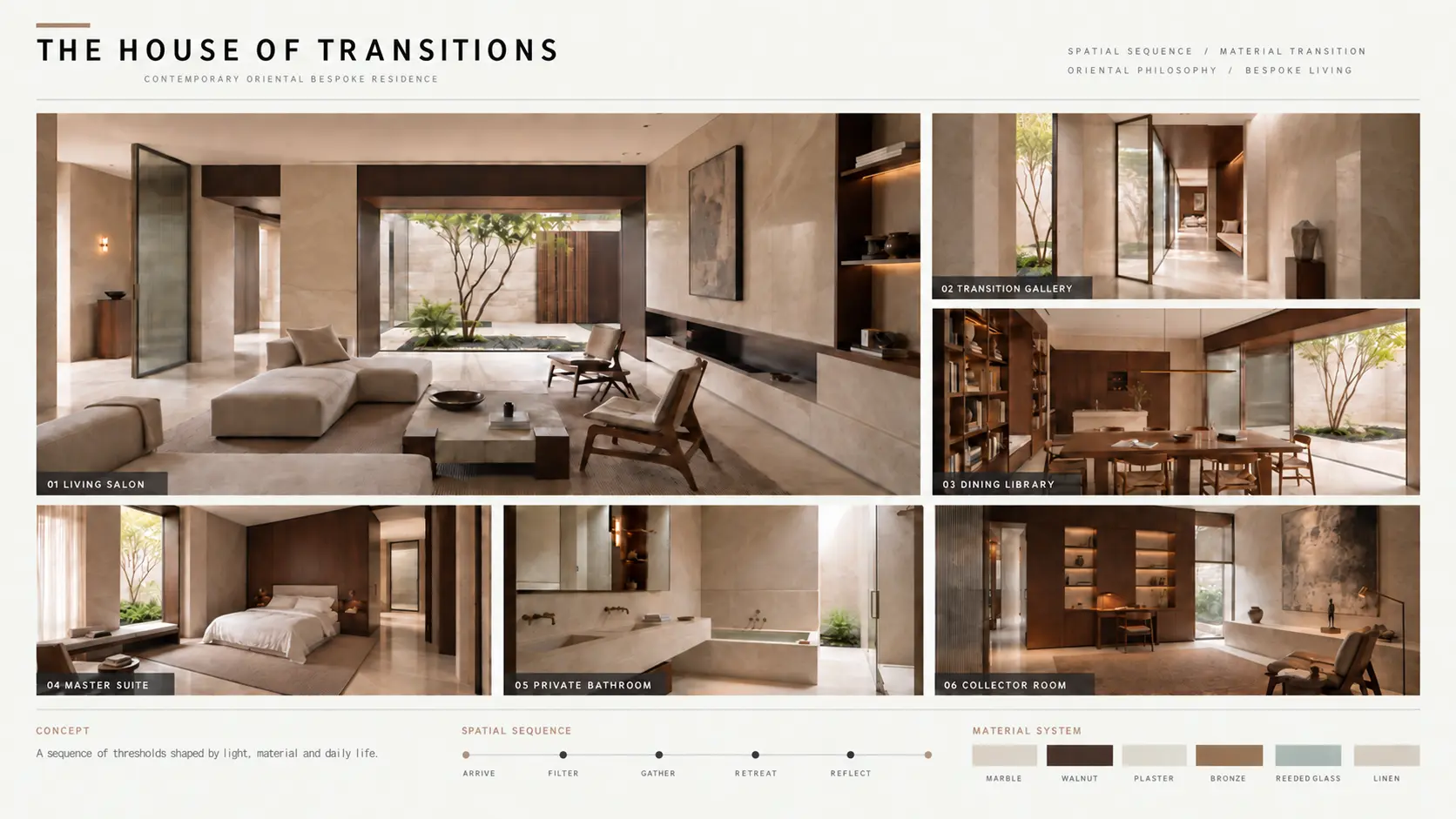
The House of Transitions takes “transition” as the central idea of its residential design, interpreting the journey home as a spatial experience that moves from the turbulence of the outside world toward inner calm. Through continuous shifts in walls, courtyards, light and materials, the design choreographs movement and pause, making the passage between different scenes of daily life an integral part of the home. The corridor is a key vehicle for this experience. A sequence of framed views, alternating layers of depth and translucent fluted-glass screens allows the sightline to unfold gradually between concealment and revelation. Courtyards are woven into the interior view, where tree shadows, daylight and stone walls create visual pauses along the way. The boundaries of the space therefore both separate and connect: they preserve the privacy of individual areas while allowing the light and activity of adjoining spaces to remain perceptible. Low furniture and an open, relaxed arrangement establish the living room as the shared centre of family life, with the courtyard forming a backdrop for everyday conversation and rest. Dining, cooking and reading functions overlap, enabling the table to accommodate meals, reading and companionship. Timber surfaces, textiles and a window seat create a quiet sense of repose in the bedroom, while stone and natural light extend this atmosphere into the bathroom. The collection room integrates books, objects and art into daily life, offering a more private place for solitude and reflection. Transitions in material help shape the emotional character of the interior. Pale stone establishes a calm and continuous foundation; dark timber brings warmth and a sense of enclosure; and fluted glass admits light while softening views. Metal details and natural textiles provide local accents, balancing hardness with softness and transparency with weight. Materials shift in response to the use of each space, allowing boundaries to be perceived through both the body and the senses. The design responds to Eastern spatial sensibilities through its orchestration of concealment and revelation, movement and pause, and deliberate emptiness. Doorways frame views, corridors invite moments of stillness, and courtyards draw nature deep into the home. The House of Transitions seeks to establish an unhurried rhythm of living: one in which people gradually slow down as they move through the house, shift freely between togetherness and solitude, and find a sense of belonging in the subtle changes of light, shadow and everyday life.
SELECTION BASIS
The project was selected for its clear design position, coherent execution and relevance to SPATIAL DESIGN. Its identity, imagery and source can be traced within the annual record.
DISTINCTION BASIS
The QUARTERLY BEST designation records the project’s comparative strength in concept, resolution, context and lasting professional value.
SOURCE RECORD
SUBMISSION PACKAGE
EDITORIAL REVIEW
QUARTERLY BEST
The House of Transitions presents a mature and restrained spatial narrative. Centred on liminality and transition, the design links the corridor, courtyards and functional areas into a rhythmic sequence of everyday life. Light moves across stone, walnut, metal and fluted glass, creating interiors that are at once open and serene, layered and warm. Rather than relying on superficial references to Eastern motifs, the project reinterprets the spirit of contemporary Eastern living through negative space, borrowed views, shifts between solidity and transparency, and precise control of scale. Openness and privacy, order and ease, display and daily life are held in a finely judged balance. The planning is rigorous, the detailing precise, and the material transitions natural. The result is a highly resolved and enduring design with a distinctive, memorable identity—an exceptional work that combines aesthetic resonance, humanistic depth and genuine insight into everyday living.